A longtime patient had come in complaining of progressive fatigue, weakness, and numbness in her hands and feet. Her primary-care physician and I were taking a few seconds to skim her medical chart before we stopped by her room to examine her.
I glanced at the patient's weight and noticed that she was borderline obese. A potential diagnosis came together in my mind. "Has this patient ever had gastric bypass surgery?" I asked.
Him: "No."
Me: "Darn."
Him: "Why do you ask?"
Me: "I was wondering if maybe she has a vitamin deficiency, like B12, that's causing her symptoms." Some types of gastric bypass, such as Roux-en-Y procedures, remove some of the small intestine, thus reducing absorption of certain critical vitamins. Patients are supposed to take hefty vitamin supplements for life as a result.
Him: "It was a nice thought."
We went in to see the patient. She was very unhappy because she felt like she had no energy. Her family and job were stressful. And she was disappointed with her weight. "Even after getting that gastric bypass, I still weigh too much."
The doctor's eyes lit up. "How long ago was your gastric bypass?" he asked.
"It happened maybe 4 years back," the patient responded.
"I assume after your procedure they prescribed a special mega-vitamin."
"Yeah, but I didn't like it. I stopped taking it maybe half a year ago."
I couldn't stop myself from grinning.
Although I'm not skilled enough to be seeing patients entirely on my own, sometimes I've been able to make diagnoses that the doctors I'm with have overlooked. Part of the reason is that my training is uneven. In medical school, we spend a lot of time learning diseases that are rarely encountered in clinical practice. We also have seen so few patients that we have little sense of what is common and what is uncommon, which diseases make sense and which ones don't. When I see a patient, the list of diseases I'm considering differs from that of a seasoned physician.
But sometimes the patient doesn't have the disease a seasoned physician expects, and these are the times I get to shine. Sometimes, two minds are better than one. I wouldn't have expected it, but I think that patients get better care when they are examined by both a physician and a medical student as opposed to only a physician.
Showing posts with label clinical notes. Show all posts
Showing posts with label clinical notes. Show all posts
02 January 2013
21 November 2012
Foresight
HERDSMANI find Oedipus Rex tough to read, because everyone but Oedipus sees where things are headed. Oedipus doggedly investigates the death of the king. He is blindsided (and blinded) by the sudden revelation (see above) that he had unknowingly killed the king (his father) and wed his mother. Throughout the play, Oedipus is a step behind everyone else. He's the last to know the truth.
If you are in fact what this man says,
God have pity on you! You were born to misery.
OEDIPUS
Oh! Oh! All come to pass, all true!
A patient came in with rapidly progressive weakness of recent onset. In his usual state of health just months ago, he could hardly walk without falling and could barely summon the strength and dexterity required to button his shirt. He wanted to know why.
At the start of the visit, the physician and I assembled differential diagnoses in our minds. The physician obtained an excellent patient history, eliciting answers that ruled out some of the diagnoses on our lists. Pretty soon, all of the potentially reversible illnesses on my differential were ruled out. Nothing much seemed to fit the patient's symptoms, except for amyotrophic lateral sclerosis (ALS, also called Lou Gehrig's Disease). It is an awful disease, progressively paralyzing the body's muscles while leaving one's mental faculties intact.
We moved on to the physical examination. The doctor performed tests specific to ALS, and our findings increasingly supported that diagnosis. I was filled with a horrible sense of foreboding. I could tell that within minutes the diagnosis would be confirmed. Given the rapid progression of his disease, he didn't have many more months to live. I steeled myself for the wrenching moment when the patient would be informed.
Our medical training confers upon us some prophetic powers. In making diagnoses, we interpret signs on the body that are inscrutable to most. With our medical knowledge, we can sometimes accurately predict the course of a disease. Like Cassandra and Tiresias of ancient Greece, we issue dire warnings ("if you don't quit drinking, it will kill you!") that often go unheeded.
But as neat as it is to see the future, I now understand that this faculty can be a burden. Like those prophets of old, we were condemned to foretell this patient's tragic fate yet powerless to alter it.


10 April 2012
Presenting
When medical students do their clinical rotations, an important ritual is the presentation of a new patient case to the medical team. The student tries to orient the team to all relevant aspects of the case, including (among other things) the patient's age, gender, and background; the patient's "chief complaint"; the history of the illness; the relevant lab findings and imaging studies; the differential diagnosis; and the presenter's recommended plan of action.
Presenting is a real art. The presenter needs to condense all they have learned about the patient (how many grandchildren they have, what they ate for lunch) into only a digest of the most relevant details. But who can know just what details are most relevant? A patient's broken arm might have an underlying cause, like a genetic defect in bone formation, a tumor that has invaded the bone, or a history of trauma from an abusive spouse. Different diagnoses center around different aspects of a case history: a history of prior broken bones for a genetic defect; a history of unexpected weight loss for cancer; a history of marital strife for domestic abuse.
The problem is that the diagnosis is usually uncertain. If the presenter has a good idea of what the diagnosis will be, he focuses his presentation around that hypothesis. But at the same time, he needs to include enough details so that even if his hunch was wrong, the listener could arrive at the correct diagnosis nonetheless. Medical students must tread especially carefully, because they are not as experienced as attending physicians at assembling the constellation of symptoms, history, and physical findings into a unifying diagnosis.
Emphasis matters. While shadowing, I heard a presentation that emphasized minor details but buried a worrisome lab finding that suggested urgent life-threatening disease.
The presentation objectively informs and subjectively argues; the presenter draws upon what he knows yet is mindful of what he does not. From the outside, the practice of medicine might seem formulaic and almost robotic. But the presentation is not. It hinges upon one's unique ability to observe, investigate, reason, and communicate.
Presenting is a real art. The presenter needs to condense all they have learned about the patient (how many grandchildren they have, what they ate for lunch) into only a digest of the most relevant details. But who can know just what details are most relevant? A patient's broken arm might have an underlying cause, like a genetic defect in bone formation, a tumor that has invaded the bone, or a history of trauma from an abusive spouse. Different diagnoses center around different aspects of a case history: a history of prior broken bones for a genetic defect; a history of unexpected weight loss for cancer; a history of marital strife for domestic abuse.
The problem is that the diagnosis is usually uncertain. If the presenter has a good idea of what the diagnosis will be, he focuses his presentation around that hypothesis. But at the same time, he needs to include enough details so that even if his hunch was wrong, the listener could arrive at the correct diagnosis nonetheless. Medical students must tread especially carefully, because they are not as experienced as attending physicians at assembling the constellation of symptoms, history, and physical findings into a unifying diagnosis.
Emphasis matters. While shadowing, I heard a presentation that emphasized minor details but buried a worrisome lab finding that suggested urgent life-threatening disease.
The presentation objectively informs and subjectively argues; the presenter draws upon what he knows yet is mindful of what he does not. From the outside, the practice of medicine might seem formulaic and almost robotic. But the presentation is not. It hinges upon one's unique ability to observe, investigate, reason, and communicate.
23 March 2012
Pathology
When a doctor takes a blood sample or a surgeon collects a tissue biopsy, it's sent to "the lab" for analysis by a pathologist. The pathologist's job is to assist in diagnosis and treatment by analyzing tissues, fluids, and cells. They are responsible for performing blood tests as well as autopsies (dissections that identify deceased patients' cause of death). A pathologist was kind enough to spend a morning showing me around "the lab."
When a surgeon removes, say, cancerous breast tissue, the tissue is sent to the pathology department. There, the tissue is immersed in a series of chemicals that render the tissue stable and that halt the reactions (including decay) that cells undergo. The tissue is mounted onto microscope slides and then stained in special dyes that colorfully render the features of cells. Sometimes, the pathologist will order special tests that test for the presence of a certain protein on the cell's surface. For example, a breast cancer drug called trastuzumab works by acting on a protein called "HER2." HER2 is expressed on the surface of tumor cells in only some types of breast cancer. By testing for the presence of HER2 on the cell surface, the pathologist establishes whether the drug can be used. In nearly all aspects of medicine, pathology findings are a valuable tool in deciding on treatment.
One of the most interesting parts of the tour was the frozen section room. A neurosurgeon operating on a patient removed some brain tissue and submitted it to the frozen section room, which is strategically placed near the operating rooms. A team prepared the sample and a pathologist put it under the microscope. Tragically, he determined that the tissue was a highly malignant form of brain cancer. Using this information, the neurosurgeon could modify his procedure to make sure that he removed all of the cancerous tissue.
Pathology is a very intellectual field that requires knowledge of rare diseases and very obscure parts of medicine. Most pathologists do not interact with patients, but they are in constant touch with doctors across all specialties. I enjoyed my inside look at this behind-the-scenes aspect of clinical medicine.
When a surgeon removes, say, cancerous breast tissue, the tissue is sent to the pathology department. There, the tissue is immersed in a series of chemicals that render the tissue stable and that halt the reactions (including decay) that cells undergo. The tissue is mounted onto microscope slides and then stained in special dyes that colorfully render the features of cells. Sometimes, the pathologist will order special tests that test for the presence of a certain protein on the cell's surface. For example, a breast cancer drug called trastuzumab works by acting on a protein called "HER2." HER2 is expressed on the surface of tumor cells in only some types of breast cancer. By testing for the presence of HER2 on the cell surface, the pathologist establishes whether the drug can be used. In nearly all aspects of medicine, pathology findings are a valuable tool in deciding on treatment.
One of the most interesting parts of the tour was the frozen section room. A neurosurgeon operating on a patient removed some brain tissue and submitted it to the frozen section room, which is strategically placed near the operating rooms. A team prepared the sample and a pathologist put it under the microscope. Tragically, he determined that the tissue was a highly malignant form of brain cancer. Using this information, the neurosurgeon could modify his procedure to make sure that he removed all of the cancerous tissue.
Pathology is a very intellectual field that requires knowledge of rare diseases and very obscure parts of medicine. Most pathologists do not interact with patients, but they are in constant touch with doctors across all specialties. I enjoyed my inside look at this behind-the-scenes aspect of clinical medicine.
11 January 2012
Improvement
Although we've been taught how to perform a physical exam, I have a hard time knowing what is concerning and what is normal. If an obese patient can only weakly push up against my hand, does it signal underlying neurological damage or is it just a sign that they don't exercise? Is that yellowish coating on the patient's tongue a stain from tobacco or a precancerous lesion? What is a normal range of motion for the shoulder of a 70-year-old? Given my lack of experience performing physical examinations and interpreting them, I place little stock in my physical exam findings.
Something sounded funny when I listened to one patient's heart. Since she was morbidly obese, it was difficult to hear clearly through the layers of fat. I couldn't even figure out at which stage of the heartbeat I thought the irregularity was taking place, or what the irregularity might signify. I just knew that my "spidey sense" was going off. Another med student was also in the exam room, and I asked him to confirm. After listening for a long time, he gave up. "I can't hear anything strange."
When I stepped out of the exam room, I thumbed through her chart. The patient had been seen in clinic several times, and there was no mention of a heart murmur. This left three possibilities:
1. Her heart sounds were actually normal and I heard it wrong;
2. Her heart sounds were abnormal and every med student in the past had missed it;
3. Her heart sounds had changed recently from normal to abnormal.
I presumed that the answer was number 1, but I made sure that the attending physician had a listen anyway. The doctor listened for a long time and then announced that there was a faint (and harmless) systolic murmur. The patient confirmed that as a child she was told she had a slight heart murmur.
It felt good. I think I'm getting the hang of this.
Something sounded funny when I listened to one patient's heart. Since she was morbidly obese, it was difficult to hear clearly through the layers of fat. I couldn't even figure out at which stage of the heartbeat I thought the irregularity was taking place, or what the irregularity might signify. I just knew that my "spidey sense" was going off. Another med student was also in the exam room, and I asked him to confirm. After listening for a long time, he gave up. "I can't hear anything strange."
When I stepped out of the exam room, I thumbed through her chart. The patient had been seen in clinic several times, and there was no mention of a heart murmur. This left three possibilities:
1. Her heart sounds were actually normal and I heard it wrong;
2. Her heart sounds were abnormal and every med student in the past had missed it;
3. Her heart sounds had changed recently from normal to abnormal.
I presumed that the answer was number 1, but I made sure that the attending physician had a listen anyway. The doctor listened for a long time and then announced that there was a faint (and harmless) systolic murmur. The patient confirmed that as a child she was told she had a slight heart murmur.
It felt good. I think I'm getting the hang of this.
27 September 2011
Mistakes
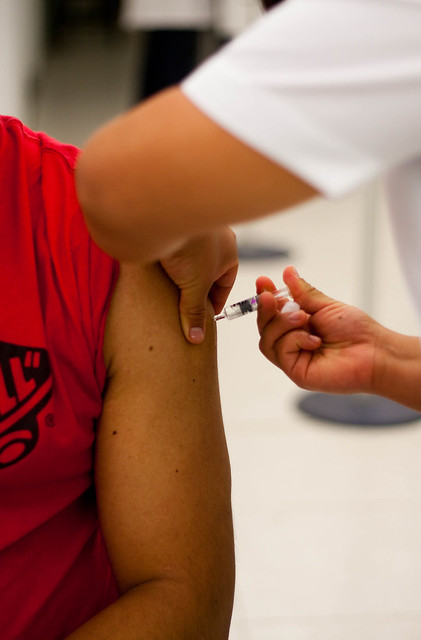
I tried to look calm and found an attending physician, who assured me that everything was fine. The amount of air in vaccines is miniscule, and in fact, having a bit of air in the syringe often helps an intramuscular injection. No harm done. But I was still shaken. Just like that, I had skipped a step that I had believed at the time to be critical.
The experience convinced me of just how easy it is to commit a medical error.
Even a simple procedure like administering a vaccine involves a number of important sequential steps. The sharps disposal container needs to be placed within arm's reach before the needle's cap is removed. The medical chart needs to be double-checked to ensure that the correct vaccination is being given. The injection site needs to be disinfected properly. Inevitably, even the best practitioners mess up a step. Medical errors are a tremendous problem, responsible for 48,000 to 98,000 deaths per year.
There is a growing movement to use checklists when carrying out medical procedures, just as pilots do when they fly. My favorite medical writer, Prof. Atul Gawande, wrote a fascinating article in the New Yorker on the subject, which I encourage you to read for free. Yes, individuals commit errors, yet the systems they work in can reduce the likelihood of those errors. For example, anesthesiology equipment wasn't standardized in the past, and turning a knob to the right would release more anesthetic on some machines and release less anesthetic on others. Now the equipment is consistent at every hospital in the country, avoiding needless deaths.
The fruits of prevention efforts are masked. When a hospital implements a labeling system to avoid wrong-side surgeries, patients who are saved won't know how narrowly they avoided catastrophe. It's not very obvious when the system succeeds, only when it fails. But even if prevention isn't sexy, we need to still try. Avoiding medical errors is inexpensive, it saves lives, and it is the right thing to do. For my part, I'm writing up a checklist for myself on how to administer vaccines properly.
Photo reproduced with permission via Creative Commons license. Author: @alviseni
04 September 2011
Clinical notes
The patient was 44 years old and had an uncontrollable, Parkinson-like tremor in both hands that had been worsening for months. His shaking hands were getting in the way of his manual-labor job and made everyday tasks such as clothing himself and brushing his teeth nearly impossible.
It's almost inexplicable for someone so young to develop Parkinson's. Something else had to be at play--the patient's longtime meth use, which he had unsuccessfully tried to break and which he hid from his family. Now the drug had caught up with him, causing what was likely permanent damage to his brain. The news that the meth was jeopardizing his ability to support his family came as a sobering shock. When the physician informed him that he must never take another dose of meth, ever, the patient teared up, gravely agreed, and vowed to change.
Everyone in the exam room was touched by this patient, who was quite likeable and was trapped and diminished by addiction. He had persevered in the face of past obstacles, and had tried to do good for himself and his family. Now, his own worst enemy was himself, and only through sheer willpower could he stop his demon from claiming more of his body.
It's almost inexplicable for someone so young to develop Parkinson's. Something else had to be at play--the patient's longtime meth use, which he had unsuccessfully tried to break and which he hid from his family. Now the drug had caught up with him, causing what was likely permanent damage to his brain. The news that the meth was jeopardizing his ability to support his family came as a sobering shock. When the physician informed him that he must never take another dose of meth, ever, the patient teared up, gravely agreed, and vowed to change.
Everyone in the exam room was touched by this patient, who was quite likeable and was trapped and diminished by addiction. He had persevered in the face of past obstacles, and had tried to do good for himself and his family. Now, his own worst enemy was himself, and only through sheer willpower could he stop his demon from claiming more of his body.
27 August 2011
Issues with shoes
My patient, a homeless man in decent health, came to our volunteer clinic because he had "athlete's foot" and wanted an anti-fungal.
When I asked him to remove his shoes and socks so I could take a look, he refused. I pointed out that most doctors won't write a prescription for something unless they can examine it. He still refused and wouldn't say why. He cooperated with the other parts of the exam.
I brought in the attending physician, who asked to look at the foot. No dice. The physician and I conferred:
What's going on here? Maybe he doesn't have athlete's foot and he's getting it for a friend? Maybe it smells really bad and he's embarrassed?
We ultimately gave him a tube of prescription topical antifungal (we didn't have non-prescription). There isn't much you can do with antifungal cream (would it get you high if you snorted it?) and we didn't think there's much of a black market for Lamisil. We probably helped someone's athlete's foot, although who knows if it was the patient's.
I don't know which is more incredible: that the patient thought he could get anti-fungals without showing us his foot, or that he got just that.
When I asked him to remove his shoes and socks so I could take a look, he refused. I pointed out that most doctors won't write a prescription for something unless they can examine it. He still refused and wouldn't say why. He cooperated with the other parts of the exam.
I brought in the attending physician, who asked to look at the foot. No dice. The physician and I conferred:
What's going on here? Maybe he doesn't have athlete's foot and he's getting it for a friend? Maybe it smells really bad and he's embarrassed?
We ultimately gave him a tube of prescription topical antifungal (we didn't have non-prescription). There isn't much you can do with antifungal cream (would it get you high if you snorted it?) and we didn't think there's much of a black market for Lamisil. We probably helped someone's athlete's foot, although who knows if it was the patient's.
I don't know which is more incredible: that the patient thought he could get anti-fungals without showing us his foot, or that he got just that.
21 August 2011
A morning on the wards
An internal medicine hospitalist (a physician who cares solely for hospitalized adult patients who are not in the ICU) kindly took me along as he rounded on his patients. Together we went over his patients' lab results, imaging studies, and medical histories and then traversed the wards to check on them.
I knew that hospitalized patients ("inpatients") would be sicker than the patients I saw in outpatient clinic. But it was more sobering than I expected interacting with them and learning the extent of their illnesses. Examples of frequent medical issues during the three hours I was on the wards:
-incurable metastatic cancer
-severe and irreversible breathing problems, brought on by smoking tobacco, smoking cocaine, morbid obesity, exposure to Agent Orange, and venous blood clots that had migrated to the lungs ("pulmonary embolism")
-dementia and delirium; whether because of denial or cognitive impairments, many patients were largely unaware of their diagnoses and their treatment plans.
-urinary incontinence and constipation (a side-effect of the high doses of painkillers the patients required).
-a lack of a support network; one patient can't be discharged until the hospital can find a skilled nursing facility to house him, with no resolution in sight.
Most patients were either getting worse or staying the same. The physician had to inform several patients that the end was drawing near. One patient, who understood he was seriously ill but had a decent chance of recovery, asked hoarsely if we could "do a Kevorkian" on him. The hospitalist's response was perfect: "Not going to happen. Kevorkian was a Michigan guy, and I root for Ohio State because my kids go there for school." Instead, the hospitalist suggested that the patient change his "code status," so that medical staff would not perform CPR or place him on a ventilator should he stop breathing on his own. The patient's mood lightened, and the hospitalist secured his OK on continuing for now with aggressive treatment. Still, the patients were a depressed lot (and justifiably so, accompanied as they are by pain and the specter of death). It seemed that having family, friends, or some avenue of self-expression would have helped many of them considerably, but instead the TV was their sole means of escaping the monotony of the hospital room. If I wasn't scrambling to pay for med school, I'd be tempted to buy Etch-a-Sketches for the patients in the wards, just so they could do something creative.
I didn't shadow physicians before starting medical school (while nearly all successful med school applicants shadow as undergrads, I remain happy with my decision). I found it useful today as a medical student for several reasons:
1. It familiarizes me with the hospital and the medical records systems.
2. It gives me an understanding of what certain specialists' day-to-day routine looks like.
3. It introduces me to new medical knowledge and examination methods, and reinforces and ties together those that I already know.
4. It reminds me why this whole med school enterprise is worth it.
5. It exposes me to how a skilled clinician interacts with his patients. My hospitalist had to perform a delicate dance, of examining his patients, asking them good questions, listening to them, providing appropriate treatment (such as appropriate doses of pain meds) comforting them, and being mindful of the time constraints his schedule placed on him. He seemed to succeed, given how many patients confessed their past drug use, unprompted.
I was glad to see how grateful the patients were to my doctor. Many told him that they trust him, that he's a "good doc", or that he cares about him. Unfortunately, many of these remarks were followed by something along the lines of, "yeah, and all of those other doctors are really cold." A partial victory for the profession, but I'll take it.
One consistent theme, and a topic of a future post, is that most of the patients' diseases either were preventable (obesity, complications from smoking, blood clots due to lack of exercise) or could have been successfully treated had they been caught earlier (disseminated cancer, sleep apnea requiring tracheostomy). Better prevention, better public health measures, a more robust primary-care system, and a better support system (such as family members) would have made a world of difference to these patients, and perhaps could have avoided these unfortunate and unnecessary brushes with death. When I brought this up to the hospitalist, he said while he was painfully aware of this reality, he couldn't let it get to him. His relationship with the patient starts when they're admitted to the hospital. What he does is comfort and heal his hospitalized patients, regardless of why they're there, and then try to ensure that his patients will receive appropriate care once they've been discharged. Seems reasonable enough.
I knew that hospitalized patients ("inpatients") would be sicker than the patients I saw in outpatient clinic. But it was more sobering than I expected interacting with them and learning the extent of their illnesses. Examples of frequent medical issues during the three hours I was on the wards:
-incurable metastatic cancer
-severe and irreversible breathing problems, brought on by smoking tobacco, smoking cocaine, morbid obesity, exposure to Agent Orange, and venous blood clots that had migrated to the lungs ("pulmonary embolism")
-dementia and delirium; whether because of denial or cognitive impairments, many patients were largely unaware of their diagnoses and their treatment plans.
-urinary incontinence and constipation (a side-effect of the high doses of painkillers the patients required).
-a lack of a support network; one patient can't be discharged until the hospital can find a skilled nursing facility to house him, with no resolution in sight.
Most patients were either getting worse or staying the same. The physician had to inform several patients that the end was drawing near. One patient, who understood he was seriously ill but had a decent chance of recovery, asked hoarsely if we could "do a Kevorkian" on him. The hospitalist's response was perfect: "Not going to happen. Kevorkian was a Michigan guy, and I root for Ohio State because my kids go there for school." Instead, the hospitalist suggested that the patient change his "code status," so that medical staff would not perform CPR or place him on a ventilator should he stop breathing on his own. The patient's mood lightened, and the hospitalist secured his OK on continuing for now with aggressive treatment. Still, the patients were a depressed lot (and justifiably so, accompanied as they are by pain and the specter of death). It seemed that having family, friends, or some avenue of self-expression would have helped many of them considerably, but instead the TV was their sole means of escaping the monotony of the hospital room. If I wasn't scrambling to pay for med school, I'd be tempted to buy Etch-a-Sketches for the patients in the wards, just so they could do something creative.
I didn't shadow physicians before starting medical school (while nearly all successful med school applicants shadow as undergrads, I remain happy with my decision). I found it useful today as a medical student for several reasons:
1. It familiarizes me with the hospital and the medical records systems.
2. It gives me an understanding of what certain specialists' day-to-day routine looks like.
3. It introduces me to new medical knowledge and examination methods, and reinforces and ties together those that I already know.
4. It reminds me why this whole med school enterprise is worth it.
5. It exposes me to how a skilled clinician interacts with his patients. My hospitalist had to perform a delicate dance, of examining his patients, asking them good questions, listening to them, providing appropriate treatment (such as appropriate doses of pain meds) comforting them, and being mindful of the time constraints his schedule placed on him. He seemed to succeed, given how many patients confessed their past drug use, unprompted.
I was glad to see how grateful the patients were to my doctor. Many told him that they trust him, that he's a "good doc", or that he cares about him. Unfortunately, many of these remarks were followed by something along the lines of, "yeah, and all of those other doctors are really cold." A partial victory for the profession, but I'll take it.
One consistent theme, and a topic of a future post, is that most of the patients' diseases either were preventable (obesity, complications from smoking, blood clots due to lack of exercise) or could have been successfully treated had they been caught earlier (disseminated cancer, sleep apnea requiring tracheostomy). Better prevention, better public health measures, a more robust primary-care system, and a better support system (such as family members) would have made a world of difference to these patients, and perhaps could have avoided these unfortunate and unnecessary brushes with death. When I brought this up to the hospitalist, he said while he was painfully aware of this reality, he couldn't let it get to him. His relationship with the patient starts when they're admitted to the hospital. What he does is comfort and heal his hospitalized patients, regardless of why they're there, and then try to ensure that his patients will receive appropriate care once they've been discharged. Seems reasonable enough.
18 August 2011
Hypertension, and my first patients
Though med school has barely begun, I've had the opportunity to don my white coat, stethoscope, and reflex hammer and examine a total of five patients in an outpatient setting. All five presented with high blood pressure, all five had previously been diagnosed with hypertension, and all five had stopped taking their hypertensive medications simply because they didn't feel like taking them anymore. It's a fitting condition for my first patients to have, in that hypertension exemplifies both the spirit and the limitations of medical practice.
My first patient was a friendly man with an all-too-common story--he was overweight, lacked health insurance, and had severe hypertension. Although he had been on drugs for hypertension in the distant past, he stopped taking his meds years ago because he felt better. He came to clinic because when he recently had his blood pressure checked, it was extremely high (the reading I obtained was a good 40 ticks higher than I had ever seen before). I sought out the supervising physician, who examined him, wrote some prescriptions, ordered some labs to see if his kidneys were damaged, and instructed him to return in a few weeks. I played pharmacist and gave him several weeks' supply of hypertensive drugs to get started.
Another patient had hypertension despite maintaining a good diet and healthy weight, as well as hypokalemia (too little potassium in the blood). The doctor suspected hyperaldosteronism (often, a tumor of the adrenal glands that overexpresses aldosterone, a hormone affecting blood pressure). Another was a fit teenage athlete with a clean bill of health, except for a menacingly high blood pressure of unknown etiology (unclear cause).
Technology gives us remarkable tools to combat hypertension. An easy-to-use, inexpensive, and reusable device (the sphygmomanometer, or blood pressure cuff) reliably diagnoses hypertension. You need not travel further than your local supermarket to check (within seconds! free!) whether the "silent killer" lurks in your arteries. But the most effective interventions are beyond medicine's grasp. Sure, we can prescribe diuretics and ACE inhibitors, but public health is best equipped to tackle the problems that usually cause or exacerbate hypertension--the shocking and indefensible amount of sodium in processed foods; and people eating poor diets, exercising too little, and weighing too much. Funding PE in schools or having the FDA follow through on its proposal to regulate salt in processed foods would far outstrip the concerted efforts of thousands of well-meaning doctors and medical students.
Telling the patient, "improve your diet" and "exercise more" doesn't help either. Two of my patients don't speak English--how are they going to figure out what foods have lower sodium when they go shopping? Another has no job--how will they pay for more expensive, but healthier foods? Another has a bad knee--how are they going to exercise?
So we prescribe them meds, and many patients take them for a few months and then stop. It's hard to blame them--while the drugs have side effects, hypertension feels fine. Like bad sunburns, the punishment for having high blood pressure is years or decades off. If a patient isn't motivated to make lifestyle changes to combat hypertension, how motivated will they be to stick with their meds?
The point is, science only gets the doctor so far. We understand the biochemical mechanism of hypertension, we understand how deadly it is, we can easily diagnose it, and we know how to cheaply and effectively treat and even prevent it. Yet hypertension still afflicts a third of adults in the U.S. and kills a substantial fraction of them. We can't escape the fact that patients are people, with people's foibles, strengths, and shortcomings. This makes treating chronic illness frustrating and sometimes ineffectual. But that I am dealing not just with kidneys and arteries and hearts, but with people, is what also makes clinical medicine intensely rewarding.
My first patient was a friendly man with an all-too-common story--he was overweight, lacked health insurance, and had severe hypertension. Although he had been on drugs for hypertension in the distant past, he stopped taking his meds years ago because he felt better. He came to clinic because when he recently had his blood pressure checked, it was extremely high (the reading I obtained was a good 40 ticks higher than I had ever seen before). I sought out the supervising physician, who examined him, wrote some prescriptions, ordered some labs to see if his kidneys were damaged, and instructed him to return in a few weeks. I played pharmacist and gave him several weeks' supply of hypertensive drugs to get started.
Another patient had hypertension despite maintaining a good diet and healthy weight, as well as hypokalemia (too little potassium in the blood). The doctor suspected hyperaldosteronism (often, a tumor of the adrenal glands that overexpresses aldosterone, a hormone affecting blood pressure). Another was a fit teenage athlete with a clean bill of health, except for a menacingly high blood pressure of unknown etiology (unclear cause).
Technology gives us remarkable tools to combat hypertension. An easy-to-use, inexpensive, and reusable device (the sphygmomanometer, or blood pressure cuff) reliably diagnoses hypertension. You need not travel further than your local supermarket to check (within seconds! free!) whether the "silent killer" lurks in your arteries. But the most effective interventions are beyond medicine's grasp. Sure, we can prescribe diuretics and ACE inhibitors, but public health is best equipped to tackle the problems that usually cause or exacerbate hypertension--the shocking and indefensible amount of sodium in processed foods; and people eating poor diets, exercising too little, and weighing too much. Funding PE in schools or having the FDA follow through on its proposal to regulate salt in processed foods would far outstrip the concerted efforts of thousands of well-meaning doctors and medical students.
Telling the patient, "improve your diet" and "exercise more" doesn't help either. Two of my patients don't speak English--how are they going to figure out what foods have lower sodium when they go shopping? Another has no job--how will they pay for more expensive, but healthier foods? Another has a bad knee--how are they going to exercise?
So we prescribe them meds, and many patients take them for a few months and then stop. It's hard to blame them--while the drugs have side effects, hypertension feels fine. Like bad sunburns, the punishment for having high blood pressure is years or decades off. If a patient isn't motivated to make lifestyle changes to combat hypertension, how motivated will they be to stick with their meds?
The point is, science only gets the doctor so far. We understand the biochemical mechanism of hypertension, we understand how deadly it is, we can easily diagnose it, and we know how to cheaply and effectively treat and even prevent it. Yet hypertension still afflicts a third of adults in the U.S. and kills a substantial fraction of them. We can't escape the fact that patients are people, with people's foibles, strengths, and shortcomings. This makes treating chronic illness frustrating and sometimes ineffectual. But that I am dealing not just with kidneys and arteries and hearts, but with people, is what also makes clinical medicine intensely rewarding.
Subscribe to:
Posts (Atom)