Last month, I bought a bottle of vanilla extract so I could add an extra kick to my plain yogurt. Even though the store didn't ID me, my vanilla extract contained 35% alcohol by weight, in the form of bourbon. Why? Alcohol is used in the vanilla bean extraction process, and so to ensure quality, the Food and Drug Administration (FDA) mandates that any product labeled as vanilla extract contain at least 35% ethanol. The FDA regulates quite a number of food additives, stipulating how much or how little can appear in our foods. It even regulates how many fly eggs (thirty) can be present in 100 grams of tomato paste.
Because of persistent lobbying by the food industry, the amount of sodium in foods is not regulated by the FDA. I attended a talk by a kidney specialist, who pointed out that the FDA requires all bars of antiperspirants to carry a warning: before using, anyone with kidney disease must consult with their physician. This is because the deodorant contains aluminum, which could theoretically harm those on dialysis if it somehow entered their bloodstream. He also held up a small bag of Cheez-Its, and pointed out they contain so much salt that eating them is an absolute disaster for someone on dialysis. But Cheez-Its carry no warning, because the FDA does not regulate salt content.
The Institute of Medicine released a strongly-worded 2010 report warning of dire consequences should the FDA fail to act soon. It points out that the average American adult consumes over 3,400 mg of sodium per day, far above the recommended daily value. Most of this sodium comes from processed foods--the IoM reports that about 5 percent of sodium consumption derives from salt added at the table. Unsurprisingly, about 29% of American adults have hypertension.
Perhaps sodium doesn't receive the attention the public pays to carbs, fat, and saturated fat because its effects are relatively hidden. Eating a persistently high-fat diet will give you an obvious belly. Eating a persistently high-sodium diet will predispose you to hypertension, which, until it becomes severe, is fairly asymptomatic.
But there is hope. The Obama administration and the USDA unveiled new standards for school lunches. Although industry lobbying weakened the regulations (since pizza contains tomato paste, it is counted as a vegetable), schoolchildren's lunches will soon contain more fruits and vegetables, more whole grains, and yes, less sodium. It's a step in the right direction.
Showing posts with label obesity. Show all posts
Showing posts with label obesity. Show all posts
02 February 2012
30 January 2012
A burrito that's worth its salt?
Our car was barely inching along, caught in horrendous rush-hour traffic. Three classmates and I were on our way to a concert, and we needed to grab dinner before curtain. We pulled off the freeway and found a Chipotle restaurant (part of a national burrito chain). In line, I was amused to find that Chipotle now offers brown rice as a way of catering to health-conscious customers. Just what is in a Chipotle burrito?
Using Chipotle's online nutrition facts, I tabulated the sodium content for a typical burrito consisting of a flour tortilla, shredded beef, brown rice, pinto beans, mild salsa, cheese, and guacamole. This burrito contains 2,460 mg of sodium. With chips, it's 2,880 mg.
To put these numbers in context, the FDA advises that "Americans 51 or older, African-Americans of any age, and people with high blood pressure, diabetes, or chronic kidney disease should restrict their [daily sodium] intake to 1,500 mg." For the other approximately half of Americans, the FDA recommends a daily sodium intake of under 2,300 mg. The meal above substantially exceeded the recommended limit. I even held the sour cream, and I didn't order salsa for the chips!
Not that the salt is necessary. When I make burritos at home, the sodium content is about a quarter of a Chipotle burrito's (and I get to add delicious sauteed vegetables like zucchini). I don't wish to accuse Chipotle of being a particularly bad offender--indeed, it's admirable that they display their nutrition facts so prominently. Rather, these crazy values are typical of the food we eat out of a can, from a bag, or in a restaurant. It also begins to explain why it is so out of the ordinary for me to encounter patients in the free clinic who do not have hypertension.
On Thursday, I explore Congress's and the FDA's inaction on regulating the salt content of our food.
Using Chipotle's online nutrition facts, I tabulated the sodium content for a typical burrito consisting of a flour tortilla, shredded beef, brown rice, pinto beans, mild salsa, cheese, and guacamole. This burrito contains 2,460 mg of sodium. With chips, it's 2,880 mg.
To put these numbers in context, the FDA advises that "Americans 51 or older, African-Americans of any age, and people with high blood pressure, diabetes, or chronic kidney disease should restrict their [daily sodium] intake to 1,500 mg." For the other approximately half of Americans, the FDA recommends a daily sodium intake of under 2,300 mg. The meal above substantially exceeded the recommended limit. I even held the sour cream, and I didn't order salsa for the chips!
Not that the salt is necessary. When I make burritos at home, the sodium content is about a quarter of a Chipotle burrito's (and I get to add delicious sauteed vegetables like zucchini). I don't wish to accuse Chipotle of being a particularly bad offender--indeed, it's admirable that they display their nutrition facts so prominently. Rather, these crazy values are typical of the food we eat out of a can, from a bag, or in a restaurant. It also begins to explain why it is so out of the ordinary for me to encounter patients in the free clinic who do not have hypertension.
On Thursday, I explore Congress's and the FDA's inaction on regulating the salt content of our food.


17 January 2012
Obesity wake-up call
The CDC has just updated its obesity statistics. In 2009-2010:
33.1% of American adults were overweight (25 ≤ BMI < 30); and a further
35.7% of American adults were obese (BMI ≥ 30).
In sum, about 69% of American adults are either overweight or obese. This is a national disaster.
33.1% of American adults were overweight (25 ≤ BMI < 30); and a further
35.7% of American adults were obese (BMI ≥ 30).
In sum, about 69% of American adults are either overweight or obese. This is a national disaster.
26 September 2011
An afternoon at elementary school
How familiar are inner-city kids with vegetables and healthy eating? I was pleasantly surprised to find out.
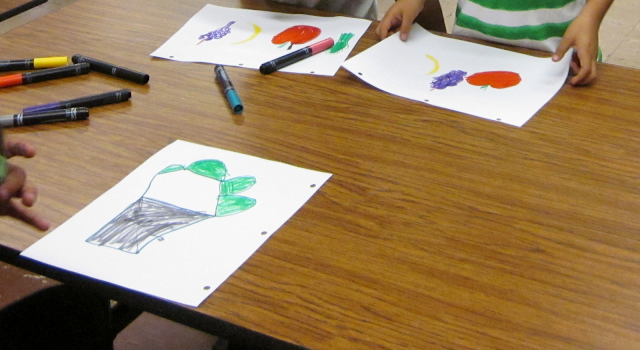
A classmate arranged for interested students to design and deliver an hour-long presentation about health at an inner-city elementary school. I signed up and received my assignment: first graders. How can anyone spend an hour discussing medicine with kids who can't tie their own shoes?
Lost, I turned to my brother for help. He challenged me to do something about obesity, sending along this must-see (but probably heavily-edited) video from Jamie Oliver's Food Revolution. The first-graders shown live in one of the most obese counties in the nation:
A challenge took shape: could my first-graders outdo their Huntington, West Virginia counterparts in identifying vegetables? With little more than a white coat, stethoscope, and zealous enthusiasm, could I inspire young children to improve their diets? My brother proposed a curriculum:
1. Explain how vegetables are a delicious and awesome part of a balanced diet.
2. Show various vegetables and see if students can identify them.
3. Have students draw a picture that has a vegetable in it.
4. Have students vote for their favorite vegetable.
5. Explain that anyone can be a doctor if they work hard in all subjects in school.
6. Feast on baby carrots.
I woke up early to snag exactly one of every vegetable from the local food co-op. My trip to the check-out portended badly for the vegetable quiz later that day, when the clerk and I disagreed over whether a root vegetable in my basket should be rung up as a leek or a garlic stalk.
A thoughtful classmate who is passionate about nutrition and excellent with kids thankfully offered to join me and split teaching duties. We drove to a rough part of town and found our school.
First graders say adorable things. Our presentation began something like this:
Med Student A: "We're medical students and we're here today to talk about vegetables! Vegetables are...yes, I see a hand."
Ashley: "One time, I got sick and I throwed up."
Med Student A: "Yes, that happens sometimes. Another question?"
Josiah: "My throat hurted...and...my dad made me eat ice."
Med Student B: "Yes! Ice can be good for you. So, about vegetables--"
Deidre: "I ate a banana yesterday for dinner."
Med Student B: "Awesome! I love bananas too! They're so delicious and good for you! So vegetables are..."
We eventually moved on to the quiz. Students successfully identified broccoli, carrots, cucumbers, and even eggplant. They displayed a surprisingly good grasp of what sorts of food were nutritious and which were not. They understood where vegetables grow, where they can be purchased, and even that you can grow your own vegetables in your garden and your yard. Our election crowned carrots as the crowd favorite, although ballot-stuffing plagued the polls. Unfortunately, "one man, one vote" is so foreign a concept that we tallied 50 votes among only 20 students. Fortunately, their math skills were so elementary (15 minus 11 was beyond their powers) that no one realized the election was a sham.
The students unleashed their creative juices and were keen to show us their handiwork. We saw plenty of fruits and vegetables as well as a few head-scratchers.
Annalise (holding up drawing): "What is this?"
Me: "That looks like a bunch of grapes!"
Annalise: "And this?"
Me: "That's a beautiful banana!"
Annalise: "What is this?"
Me: "Umm...I'm not really sure what that is. Is that an airplane?"
Annalise: "Aero-plane!"
It felt like I was doing improv acting again, where I had to heartily embrace all of my fellow actors' ideas (even when it meant portraying a crazed edentulous Gulf Coast fisherman) and encourage and support them. These young minds were delightfully bursting with creativity and non sequiturs.

At the end, it was time to feast on baby carrots. I have never seen kids so excited to eat carrots before. Even the kids on the playground, who we didn't teach at all, devoured our carrots after my fellow med student and I gushed over how delicious they are. Saturday morning cartoons are filled with advertisements successfully pushing sugary cereals and candy onto these malleable young minds. But this one wonderful afternoon, vegetables reigned king.
In the fight against obesity, there is hope after all.

A classmate arranged for interested students to design and deliver an hour-long presentation about health at an inner-city elementary school. I signed up and received my assignment: first graders. How can anyone spend an hour discussing medicine with kids who can't tie their own shoes?
Lost, I turned to my brother for help. He challenged me to do something about obesity, sending along this must-see (but probably heavily-edited) video from Jamie Oliver's Food Revolution. The first-graders shown live in one of the most obese counties in the nation:
A challenge took shape: could my first-graders outdo their Huntington, West Virginia counterparts in identifying vegetables? With little more than a white coat, stethoscope, and zealous enthusiasm, could I inspire young children to improve their diets? My brother proposed a curriculum:
1. Explain how vegetables are a delicious and awesome part of a balanced diet.
2. Show various vegetables and see if students can identify them.
3. Have students draw a picture that has a vegetable in it.
4. Have students vote for their favorite vegetable.
5. Explain that anyone can be a doctor if they work hard in all subjects in school.
6. Feast on baby carrots.
I woke up early to snag exactly one of every vegetable from the local food co-op. My trip to the check-out portended badly for the vegetable quiz later that day, when the clerk and I disagreed over whether a root vegetable in my basket should be rung up as a leek or a garlic stalk.
A thoughtful classmate who is passionate about nutrition and excellent with kids thankfully offered to join me and split teaching duties. We drove to a rough part of town and found our school.
First graders say adorable things. Our presentation began something like this:
Med Student A: "We're medical students and we're here today to talk about vegetables! Vegetables are...yes, I see a hand."
Ashley: "One time, I got sick and I throwed up."
Med Student A: "Yes, that happens sometimes. Another question?"
Josiah: "My throat hurted...and...my dad made me eat ice."
Med Student B: "Yes! Ice can be good for you. So, about vegetables--"
Deidre: "I ate a banana yesterday for dinner."
Med Student B: "Awesome! I love bananas too! They're so delicious and good for you! So vegetables are..."
We eventually moved on to the quiz. Students successfully identified broccoli, carrots, cucumbers, and even eggplant. They displayed a surprisingly good grasp of what sorts of food were nutritious and which were not. They understood where vegetables grow, where they can be purchased, and even that you can grow your own vegetables in your garden and your yard. Our election crowned carrots as the crowd favorite, although ballot-stuffing plagued the polls. Unfortunately, "one man, one vote" is so foreign a concept that we tallied 50 votes among only 20 students. Fortunately, their math skills were so elementary (15 minus 11 was beyond their powers) that no one realized the election was a sham.
 | |
| The election candidates |
The students unleashed their creative juices and were keen to show us their handiwork. We saw plenty of fruits and vegetables as well as a few head-scratchers.
Annalise (holding up drawing): "What is this?"
Me: "That looks like a bunch of grapes!"
Annalise: "And this?"
Me: "That's a beautiful banana!"
Annalise: "What is this?"
Me: "Umm...I'm not really sure what that is. Is that an airplane?"
Annalise: "Aero-plane!"
It felt like I was doing improv acting again, where I had to heartily embrace all of my fellow actors' ideas (even when it meant portraying a crazed edentulous Gulf Coast fisherman) and encourage and support them. These young minds were delightfully bursting with creativity and non sequiturs.

At the end, it was time to feast on baby carrots. I have never seen kids so excited to eat carrots before. Even the kids on the playground, who we didn't teach at all, devoured our carrots after my fellow med student and I gushed over how delicious they are. Saturday morning cartoons are filled with advertisements successfully pushing sugary cereals and candy onto these malleable young minds. But this one wonderful afternoon, vegetables reigned king.
In the fight against obesity, there is hope after all.
01 September 2011
How bad is it out there?
What is life like in a place without many fruits and vegetables available? The Internets Celebrities are hard to classify--they are three guys from the Bronx who make funny documentaries about serious stuff. Some years ago, they chronicled their neighborhood bodega:
Is obesity really such a problem in America today? Emphatically, yes.
I encourage you to play the CDC's slideshow on obesity by state over the past 25 years. Although Colorado currently has the lowest obesity rate in the country, its current obesity rate would have made it the fattest state in the country in 1996.
The CDC's county-by-county statistics are sobering. Some counties in Alabama and Mississippi have upwards of 40% obesity among adults. And the costs, from higher fuel costs for fatter passengers to exploding health expenditures, are accruing quickly.
But I don't feel like I see many obese people when I go around town. My time in hospital and clinic is teaching me that many are tucked out of sight, at home, in hospitals, and in nursing facilities. Obesity makes walking around more difficult (or impossible), and the social stigma against obesity makes some people reluctant to leave the house. But they are there, their ranks are growing, and the medical profession has few tools to treat (let alone cure) obesity. There is an urgent need to act.
Is obesity really such a problem in America today? Emphatically, yes.
I encourage you to play the CDC's slideshow on obesity by state over the past 25 years. Although Colorado currently has the lowest obesity rate in the country, its current obesity rate would have made it the fattest state in the country in 1996.
The CDC's county-by-county statistics are sobering. Some counties in Alabama and Mississippi have upwards of 40% obesity among adults. And the costs, from higher fuel costs for fatter passengers to exploding health expenditures, are accruing quickly.
But I don't feel like I see many obese people when I go around town. My time in hospital and clinic is teaching me that many are tucked out of sight, at home, in hospitals, and in nursing facilities. Obesity makes walking around more difficult (or impossible), and the social stigma against obesity makes some people reluctant to leave the house. But they are there, their ranks are growing, and the medical profession has few tools to treat (let alone cure) obesity. There is an urgent need to act.
31 August 2011
The trouble with obesity
What difference does it make if one person is obese instead of thin? More than you might suppose.
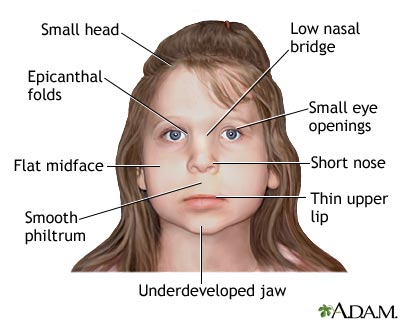 Our prenatal environment (the environment of the womb) has an outsized effect on our development. For example, drinking even modest amounts of alcohol during pregnancy can cause fetal alcohol syndrome, which includes mental retardation, stunted growth, and disfigurement of facial features (see diagram at right).
The environment of an obese woman's womb (especially one with diabetes) tends to be injurious to a fetus's metabolism. For example, a fetus will react to high placental blood sugar levels by stimulating insulin production in the pancreas or by becoming resistant to insulin. These steps apparently predispose the baby to become diabetic later in life. Among other things, being born to a obese mother makes a baby more likely to get diabetes, to have asthma, and to become obese later in life. It's not just children, either, who are affected. A convincing study in the New England Journal of Medicine suggests that when someone becomes obese during a certain interval, it makes their friends significantly more likely to become obese as well.
Preventing a patient's obesity can mean preventing their children's, grandchildren's, and friends' obesity as well. All the more incentive to act now to reverse the worldwide obesity epidemic.
[Image is in the public domain, via the NIH's A.D.A.M. medical encyclopedia]
Our prenatal environment (the environment of the womb) has an outsized effect on our development. For example, drinking even modest amounts of alcohol during pregnancy can cause fetal alcohol syndrome, which includes mental retardation, stunted growth, and disfigurement of facial features (see diagram at right).The environment of an obese woman's womb (especially one with diabetes) tends to be injurious to a fetus's metabolism. For example, a fetus will react to high placental blood sugar levels by stimulating insulin production in the pancreas or by becoming resistant to insulin. These steps apparently predispose the baby to become diabetic later in life. Among other things, being born to a obese mother makes a baby more likely to get diabetes, to have asthma, and to become obese later in life. It's not just children, either, who are affected. A convincing study in the New England Journal of Medicine suggests that when someone becomes obese during a certain interval, it makes their friends significantly more likely to become obese as well.
Preventing a patient's obesity can mean preventing their children's, grandchildren's, and friends' obesity as well. All the more incentive to act now to reverse the worldwide obesity epidemic.
[Image is in the public domain, via the NIH's A.D.A.M. medical encyclopedia]
29 August 2011
Beware of fair concessionaires' fare
TV crews reporting on the political candidates and Republican straw poll at Iowa's state fair introduced the country to the boldest frontier in fattening cuisine: deep-fried butter on a stick. In case you haven't been keeping on top of your deep-fried confections, Gawker has an enlightening video from an Iowan TV station.
It's also worth noting that the Center for Science in the Public Interest released its annual Xtreme eating awards. The awards are given to restaurants with the most insanely unhealthy menu items (this year's winners include a 2,010 calorie Cold Stone milkshake and an Applebee's pasta dish with 3,700 milligrams of sodium). I actually ate some of the Red Velvet Cake Cheescake from the Cheesecake Factory, and I can verify that the frosting really is pure cream cheese.
It's hard to stay motivated to read my textbooks on keeping people healthy when I can picture my nemeses, including KFC's culinary team, dreaming up the newest ways to jam salt and saturated fat onto their customers' trays. Is the war already lost?
It's also worth noting that the Center for Science in the Public Interest released its annual Xtreme eating awards. The awards are given to restaurants with the most insanely unhealthy menu items (this year's winners include a 2,010 calorie Cold Stone milkshake and an Applebee's pasta dish with 3,700 milligrams of sodium). I actually ate some of the Red Velvet Cake Cheescake from the Cheesecake Factory, and I can verify that the frosting really is pure cream cheese.
It's hard to stay motivated to read my textbooks on keeping people healthy when I can picture my nemeses, including KFC's culinary team, dreaming up the newest ways to jam salt and saturated fat onto their customers' trays. Is the war already lost?
Subscribe to:
Posts (Atom)